
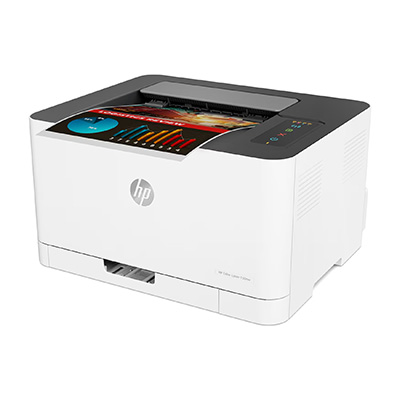
 HP Toner Laser printer
What is a Toner Laser Printer?
If you're tired of dealing with slow prints, smudged pages, and burning through expensive ink cartridges, a toner laser printer may be precisely what you need. These laser-powered machines use dry powder instead of liquid ink, giving you sharp text, faster speeds, and far better value when you're printing a lot.
In this article, we will break down what exactly a toner laser printer is, how it compares to an inkjet, and whether a switch to one makes sense for your printing habits, whether at home or in the office.
What You Need To Know About Laser Printers
A “laser printer” is often used as a synonym for a toner laser printer, and that’s not too far from the truth. Both refer to printers that utilise a laser beam to create an image on a charged drum. The fine toner powder adheres to it, then is fused onto the paper under heat and pressure to produce a clean, smudge-resistant print that also looks sharp and professional.
Toner is an electrostatically charged dry powder containing pigments and plastic particles. Unlike ink, which is partially absorbed into the page, powder remains on the surface and settles under the printer's fuser. The result is prints that are moisture-resistant and will not fade; therefore, businesses and students often prefer this type of printer for reports, coursework, or invoices.
Advantages include the fact that toner laserprinters are very reliable. They hardly ever clog and easily handle big print runs, churning out page after page with consistent results. Although they are not designed to churn out glossy photos, they do a great job of printing crisp text. The few disadvantages include limited photo realism and a higher upfront cost.
Knowing what a toner laser printer is and its value in everyday life can help you understand how this technology works behind the scenes.
How Does a Toner Laser Printer Work?
A toner laser printer basically uses light, electricity, and heat to produce quick, accurate prints. While the process sounds complicated, it follows a logical sequence that is gleaned from photocopiers.
It starts by charging an imaging drum with static electricity. A laser beam draws your document onto the drum, changing its electrical charge where the toner should stick. The fine toner powder becomes electrically attracted to the charged areas, forming an invisible image on the drum. Then the paper is rolled underneath, picking up the toner from the drum in perfect alignment.
Finally, the paper passes through the fuser unit, a heated roller system that melts the toner particles and presses them into the fibres of the paper. The result is a finished print that dries instantly and resists smudging. This powder-and-heat method contrasts with inkjet printers, which spray liquid droplets that must dry on the page.
According to leading manufacturers such as HP and Canon, laser-based printers use an electrostatic imaging process similar to that of photocopiers, which helps toner prints remain stable and uniform even at high speeds.
Understanding this process helps explain why toner laser printers are known for producing sharp, durable results. Since we have discussed how they work, let's compare them directly to inkjet printers to see where each is better.
What Is Printer Toner Used For?
Printer toner is used to produce sharp and durable prints in laser and LED printers. As a fine powder rather than liquid ink, the toner binds to paper through heating and pressure, providing long-lasting text and images. It's best suited for documents that require crisp lines and high readability, such as reports, invoices, and study materials.
From printing coursework in home offices to bulk documentation in corporate departments, toner excels in demanding settings that require efficiency and consistency. Toner is preferred in schools and small businesses because it allows high-speed, high-volume printing without smudging or drying issues.
It is also particularly effective for media such as labels, envelopes, and professional reports where smudge resistance is important. Marketing materials like flyers or brochures also benefit from the solid, uniform coverage that toner provides, keeping every page clean and polished, even after frequent handling.
What Is Printer Toner Made Of?
Toner for printers is prepared by using a combination of polymers, pigments, and additives. The polymers are usually made from styrene or polyester resins that melt through heat to fuse the toner to the paper. The pigments produce colour, black for mono printing or cyan, magenta, yellow, and black for colour prints, while additives control charge and flow to transfer onto the photoconductor drum accurately.
This exact combination ensures the toner melts evenly, producing sharp, non-smudging prints that will last. Colour toners depend on finer particles and multiple pigments for their luminous results. Modern formulations are safely contained in sealed cartridges, designed for minimal emissions and easy recycling. Many brands now use recyclable packaging, green recycling practices, and low-emission ingredients, supporting eco-friendly printing in homes and offices.
Knowing what toner is made of also underscores how different printers use it efficiently through electrostatic charge and heat, principles shared across all toner laser printer types, from compact home models to high-volume office machines.
Key Differences Between Toner Laser Printer vs Inkjet
Oddly enough, the goal is the same-quality prints. Still, the way to achieve it could hardly be more different: a toner laser printer relies on dry powder and a heated fuser, while an inkjet sprays liquid ink through microscopic nozzles. These divergent technologies come with an interesting set of trade-offs that reflect their strengths.
Toner laser printers produce sharper text and more consistent graphics since the toner is heat-fused into the paper. They print faster and can handle large volumes without frequent refills, making them practical for a home office or a small business that prints documents daily. Inkjets, however, provide more natural gradient transitions and richer colours, making them ideal for printing photographs or creative work.
Toner cartridges last for thousands of pages while ink ones frequently run dry after a few hundred. This means that although toner laser printers cost more upfront, they become more economical in the long run. However, if you only print every now and then, an inkjet may still be the better fit, since its cartridges are cheaper to replace.
In summary, toner laser printers provide faster speeds, lower long-run costs, and sharper text; inkjets print photos better and are cheaper upfront. Which printer you should buy depends on whether you prioritise volume or image quality.
Types of Toner Laser Printers
Not all toner laser printers have the same intent or purpose. Some are designed purely for speed and efficiency, while others boast advanced features necessary to run busy offices. Of course, the best type for you depends on how much you print, whether you need colour, and whether scanning or copying functions are essential parts of your daily tasks.
The following are the four significant categories of toner laser printers:
- Monochrome Toner Laser Printers: These use only black toner and are suitable for text documents with simple graphics. This would be the most economical choice if you do not require colour printing.
- Colour Toner Laser Printers: These use four toner cartridges: cyan, magenta, yellow, and black (CMYK). They are a little more expensive than monochrome ones, but print in full colour.
- Multifunction Toner Laser Printers (MFPs): These devices integrate printing, scanning, and copying, and sometimes faxing. They are available in both mono and colour and find their biggest application area in offices.
- LED Printers: In addition to using a similar toner to laser printers, LED printers use an array of light-emitting diodes instead of a laser beam to create the image on the drum. They tend to be more compact and have fewer moving parts, though they work on the same basic principle as laser printers.
The key difference is that all these types use toner powder rather than liquid ink, which is fused to the paper by heat. The main differences between them relate to colour capability, additional features, and the particular technology used to transfer the image to the drum.
From compact home models to office machines designed for efficiency and speed, toner laser printers can vary in function, colour, and capacity.
Toner Laser Printer Parts & Consumables: Toner, Drum & Fuser
Every toner laser printer relies on three main consumable components to determine the print quality: the toner cartridge, the drum unit, and the fuser. The dry powder used for text and images is housed in the toner cartridge. The composition, made of pigment, resin, and additives, is specially designed to melt at precisely the right temperature to produce prints with a sharp, durable finish.
The drum unit is a cylindrical component that receives the laser image before transferring toner to the paper. In some printers, it's integrated into the toner cartridge, while in others it's a separate unit, allowing longer life and fewer replacements.
Finally, the fuser unit uses heat and pressure to fix the toner onto the paper. Operating at high temperatures means it should not be handled immediately after printing. With time, it may have to be replaced occasionally, but it usually lasts longer than a toner or drum unit. Knowing these parts makes maintaining your printer much easier, and brings us to crucial habits of care and storage.
Simple Toner Laser Printer Maintenance Tips
Toner laser printers are relatively maintenance-free, but a couple of simple care habits will keep them running well. Wipe down the exterior with a dusting cloth occasionally, and place the printer in a cool, dry location away from direct sunlight or moisture. Extra toner cartridges should be kept in their packaging until ready to use and stored on a flat surface to maintain powder distribution.
Run any cleaning cycles built into the printer every few months, and print with the cartridge frequently to prevent toner from compacting inside. Avoid unplugging often; standby mode maintains stable internal temperatures. Most manufacturers recommend storing toner at around 15–25 °C to preserve print quality and page yield.
Toner laser printers, with proper and regular care, can churn out clear and steady prints for years with minimal wear and waste. Now that maintenance is taken care of, let's look at how these habits affect long-term printing costs and efficiency.
Running Costs and Cost per Page for Toner Laser Printers
Running costs depend on two key factors: page yield and cost per page. Page yield refers to the number of pages a cartridge can produce at about 5% page coverage, as defined by the ISO/IEC page-yield standard used by most manufacturers. Cost per page is simply the cartridge price divided by that yield.
Whereas toner laser printers are more expensive upfront, high-capacity cartridges and longer life make them cheaper in the long run. While inkjet printers may be cheaper to purchase, frequent cartridge changes raise overall costs. For anyone printing hundreds of pages each month, whether coursework, invoices, or office reports, the lower long-run cost per page of toner laser printers can translate into real savings.
Understanding these economics helps explain why so many homes and businesses view toner laser printers as a practical, efficient investment for regular use.
FAQs
Are toner laser printers always black and white?
Not always. Mono printers use only black toner; colour models combine cyan, magenta, yellow, and black to produce full-colour prints. Each colour cartridge works together with the photoconductor drum to deliver precise tones and even coverage.
Are toner laser printers useful for home use?
Yes, they suit households and home offices that print coursework, invoices, or forms quite frequently. Toner laser printers also maintain sharp text quality even after hundreds of pages, handling bulk tasks much more efficiently than inkjets.
Is toner messy or unsafe?
Modern cartridges are well-sealed, safe to handle, and designed to prevent leaks. Toner particles carry a mild electrostatic charge to ensure clean transfer onto the drum. A spill is best cleaned up by wiping with a dry cloth or using a vacuum suitable for fine powder.
Do toner laser printers print photos well?
They can print out only basic photos or charts clearly, and inkjets still provide far smoother gradients and life-like colours. Toner laser printers focus on accurate text and durable graphics rather than photographic realism.
Can you print without toner?
No. Without sufficient toner, the photoconductor drum cannot make an image. Replace the cartridge before proceeding with printing to avoid extra paper waste or uneven prints.
How can I tell if my printer uses toner or ink?
Toner is used by printers utilising electrostatic transfer and fuser heat for bonding. Inkjets: These use liquid ink sprayed through microscopic nozzles, which then require time to dry. A check with your printer manual or the cartridge code will ensure which type you have.
Final Thoughts
A toner laser printer is a laser-based printer that uses excellent powder, heat, and precision engineering to produce sharp, durable prints. This is unlike inkjet printers, which use liquid ink; instead, a toner laser printer uses toner powder and a fuser. This makes it faster, cleaner, and more efficient to use for regular printing. Toner consists of polymers, pigments, and additives that fuse to paper without leaving blemishes, resulting in smudge-resistant prints best suited for documents, reports, and other professional materials.
Different types of toner laser printers suit various needs: mono models for simple text work, colour models for graphics, and all-in-one machines for offices that need to scan or copy. In the long term, toner laser printers are usually more economical than inkjets, since they require less maintenance and offer higher page yields. By learning how toners, drums, and fusers work together, users can confidently choose the right printer and continue to enjoy consistent, high-quality prints day after day.
Using reliable supplies helps in optimum performance. Choice Stationery offers genuine and compatible toner cartridges, drum units, and fusers for their printer model. Whether printing at home or in an office, the right toner ensures every page looks professional and precise.
